

Why I still practice Child’s Pose after 25 years.
A beginning pose that lasts a lifetime.

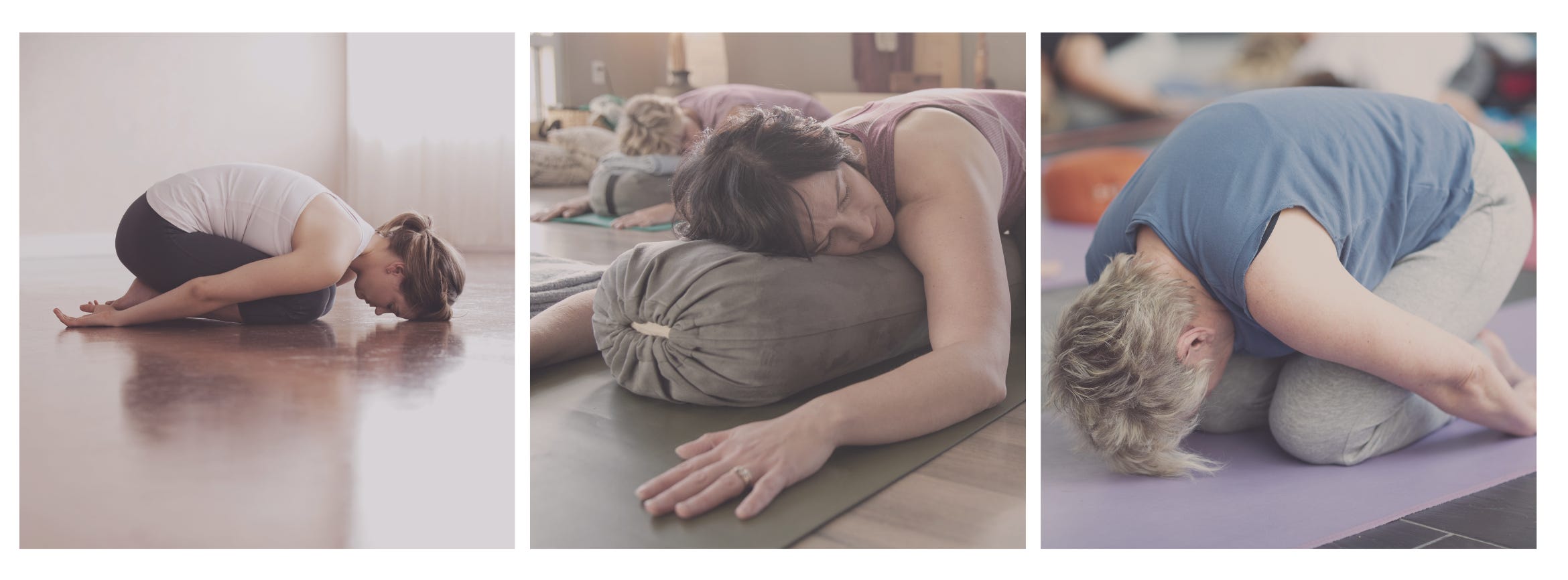
After more than 25 years of teaching yoga, Child’s Pose is still one of the shapes I return to most often.
Because each day the body speaks differently and a pose is never the same shape twice. The pose changes with the seasons of our lives. Morning bodies. Menopausal bodies. Strong bodies. Exhausted bodies.
Busy minds. Quiet minds. Aging bodies. Healing bodies.
Child’s Pose is usually introduced early in a yoga practice because the basic shape is relatively accessible. From hands and knees, the pelvis draws back toward the heels. The spine lengthens gently. The forehead may rest on the floor, on stacked fists, a blanket, or a block. Arms can stretch forward, rest alongside the body, or support the head.
For some, the pelvis easily meets the heels. For others, there’s space between them. Some people prefer knees together. Others need the knees wide. Sometimes the toes are tucked under. Often, the feel lay flat. (In the audio practice below, I will suggest modifications that you may enjoy.)
Over the years I’ve watched thousands of people practice this pose, and one thing has become very clear:
Child’s Pose does not look the same in every body.
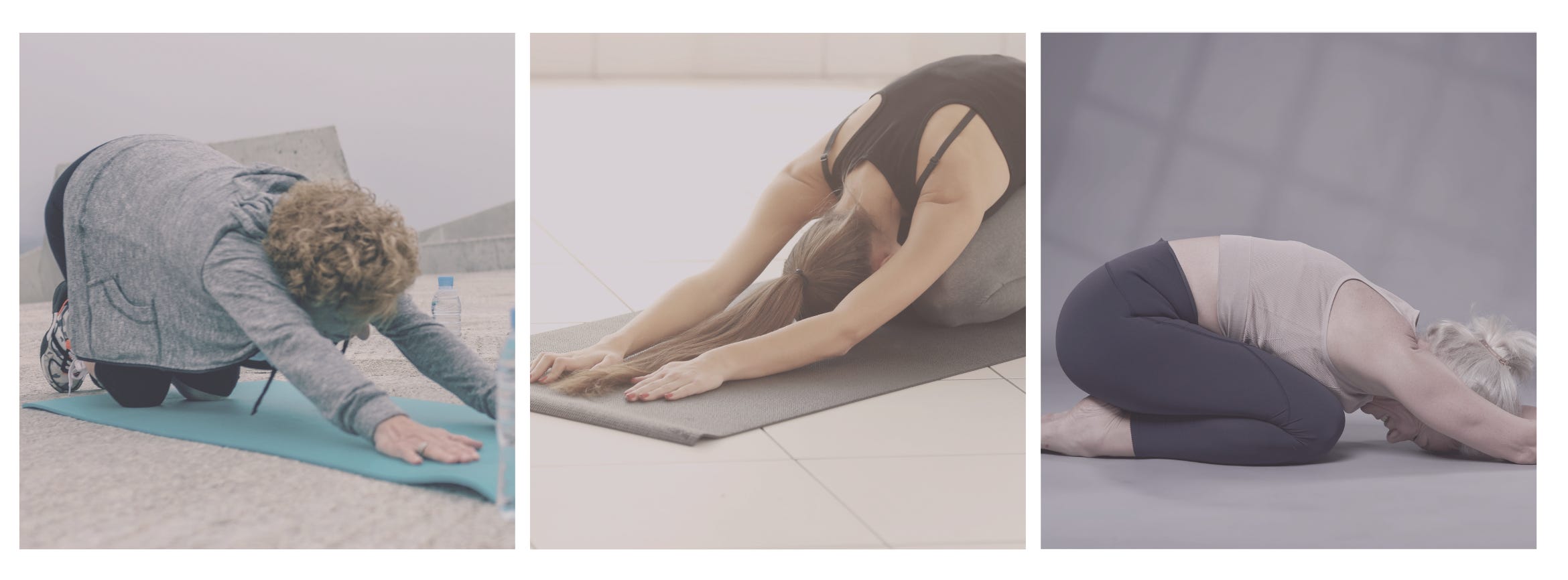
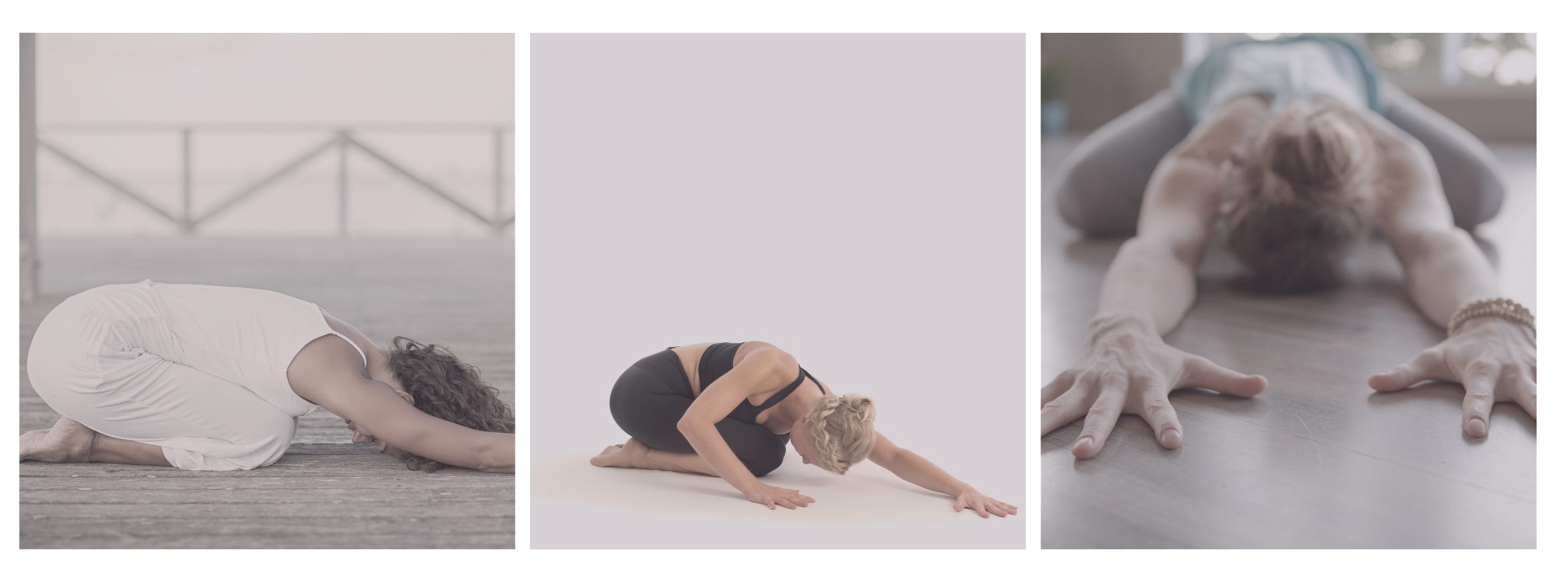
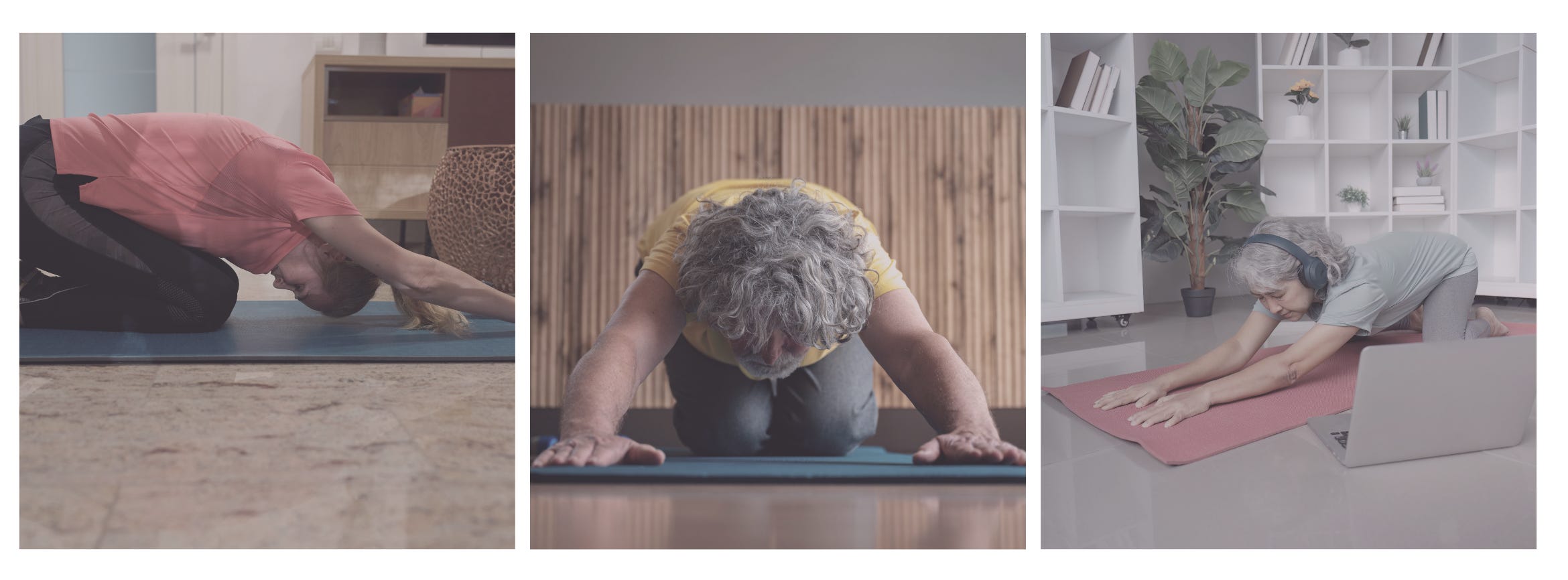
The images here aren’t examples of the “right” way. They’re here to show something students rarely get to witness in a group class…the remarkable variation between bodies attempting the same general shape.
Notice how some bodies have deep flexion in their hips and knees. Others keep their knees wide and their toes tucked under. You may notice some spines look long and extended, while others are rounded especially around the pelvis. See how some of them have their arms along side of their bodies, while others the arms rest along side of their ears or up on their finger tips. All of the variations change the impact and the feeling in the body. No way is better, it just impacts each body differently. Some of them look at ease, some of them seem to be holding tension that is hard to release.
This matters because most people quietly assume: if my pose doesn’t look like that, I must be doing it wrong.
But a yoga posture isn't a uniform to wear. It's a relationship between breath, bones, tissue, history, sensation, mood, and attention. A relationship that changes every time you return to it. Keep the relationship open to change.
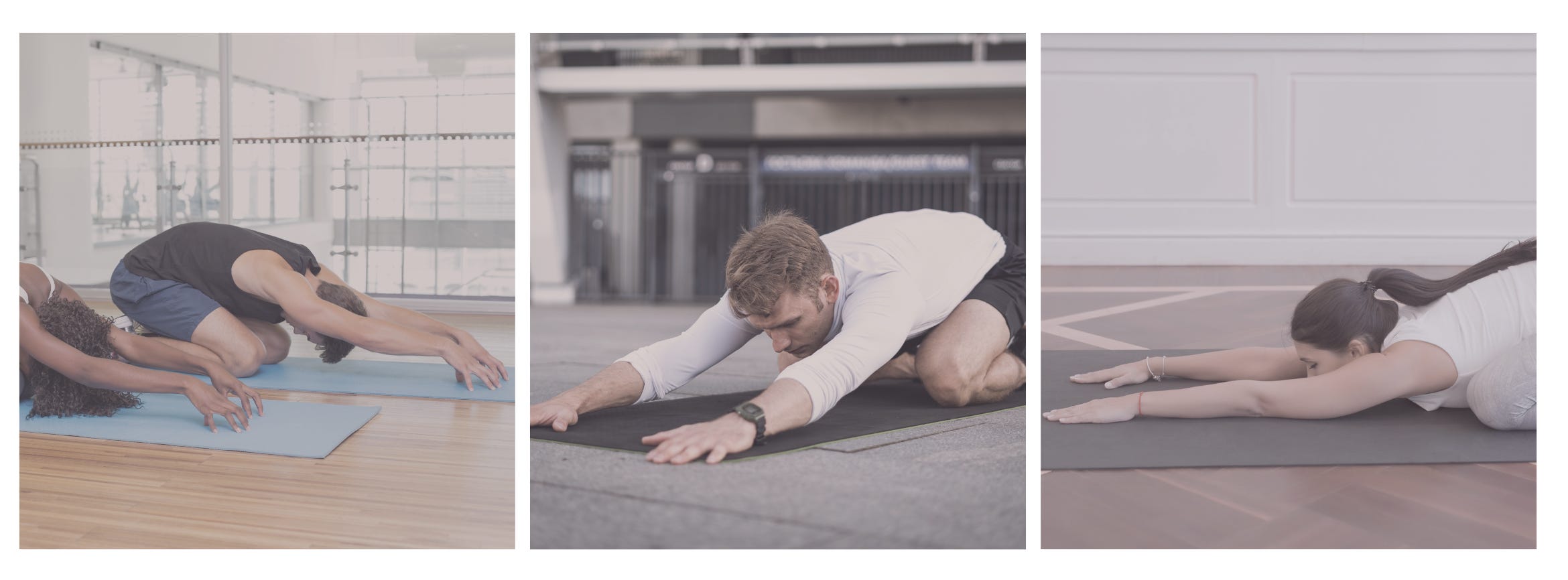
Child’s Pose is often used throughout a practice as a place to pause, rest, or reset. Physically, it can gently extend the spine, soften the hips, and frees up the tailbone. Emotionally, many people find it grounding or inward. A small shelter.
And yet, not everyone experiences it this way.
For some, folding inward feels like relief. For others, it takes time to trust the shape, or they never quite do. It’s not a happy place for their body…just a pause during the practice and then they are happy to move on. Both are real. Both are worth knowing about yourself.
This is part of why I include it in most practices. A pose that appears simple can keep revealing something new across decades. Some days Child’s Pose feels like rest. Some days resistance. Some days it’s simply a familiar place to begin.
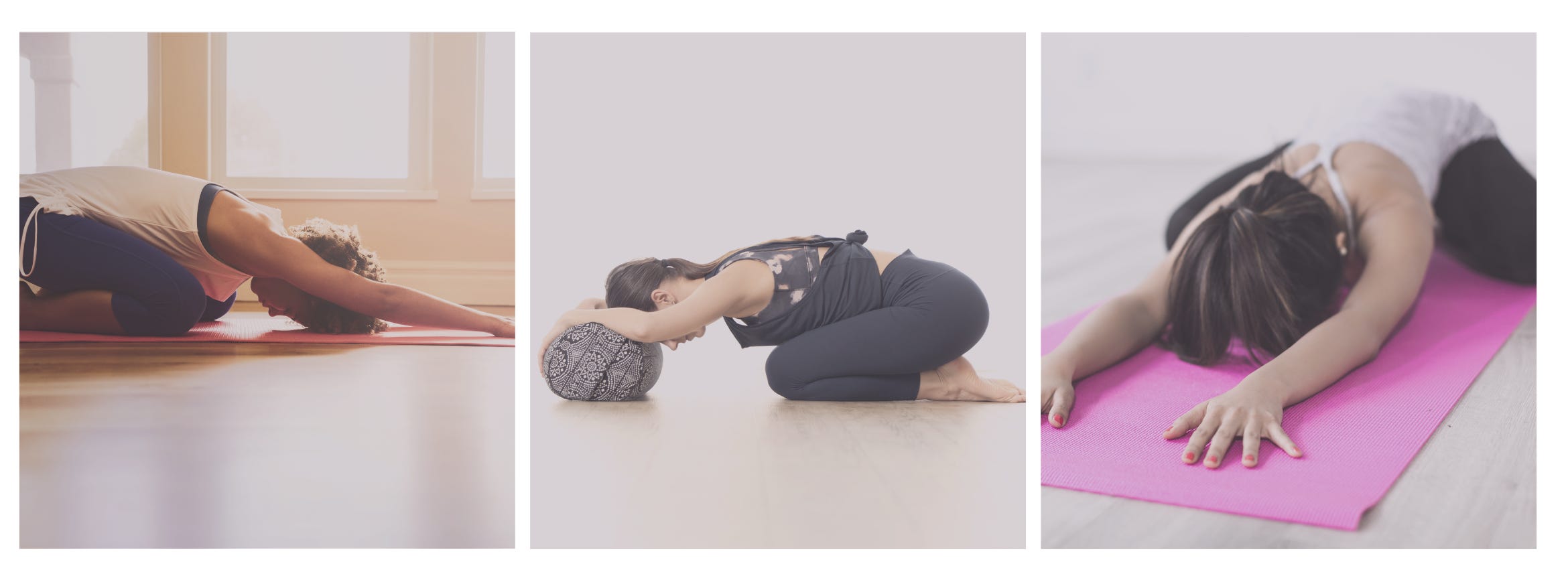
In my teaching, I try to hold each pose open — so that students can find, in their own homes, how their body needs to move on that particular day. We use yoga asana as a framework rather than a fixed destination. The movement is ultimately yours. You don’t need to force yourself into a predetermined shape for the practice to mean something.
The audio practice below is a short exploration of moving in and out of Child’s Pose with attention and curiosity. I offer suggestions for adapting the shape, and noticing sensations that inevitably arise.
Because sometimes the practice is learning how to listen while you’re there.
The Practice Behind This Post
Over twenty years of teaching yoga has taught me one thing above everything else: the poses matter less than the quality of attention you bring to them. That’s what I try to hold in everything I write here at Bring Calm Home — and it’s what I bring to the audio practice waiting for you below.
If you’re a paid subscriber, the practice is just below. If you’re not yet — this might be a good moment to change that.
And if you’d like to practice with me live, Creating Space Yoga is where that happens — weekly, online, small group.
~Robyn
